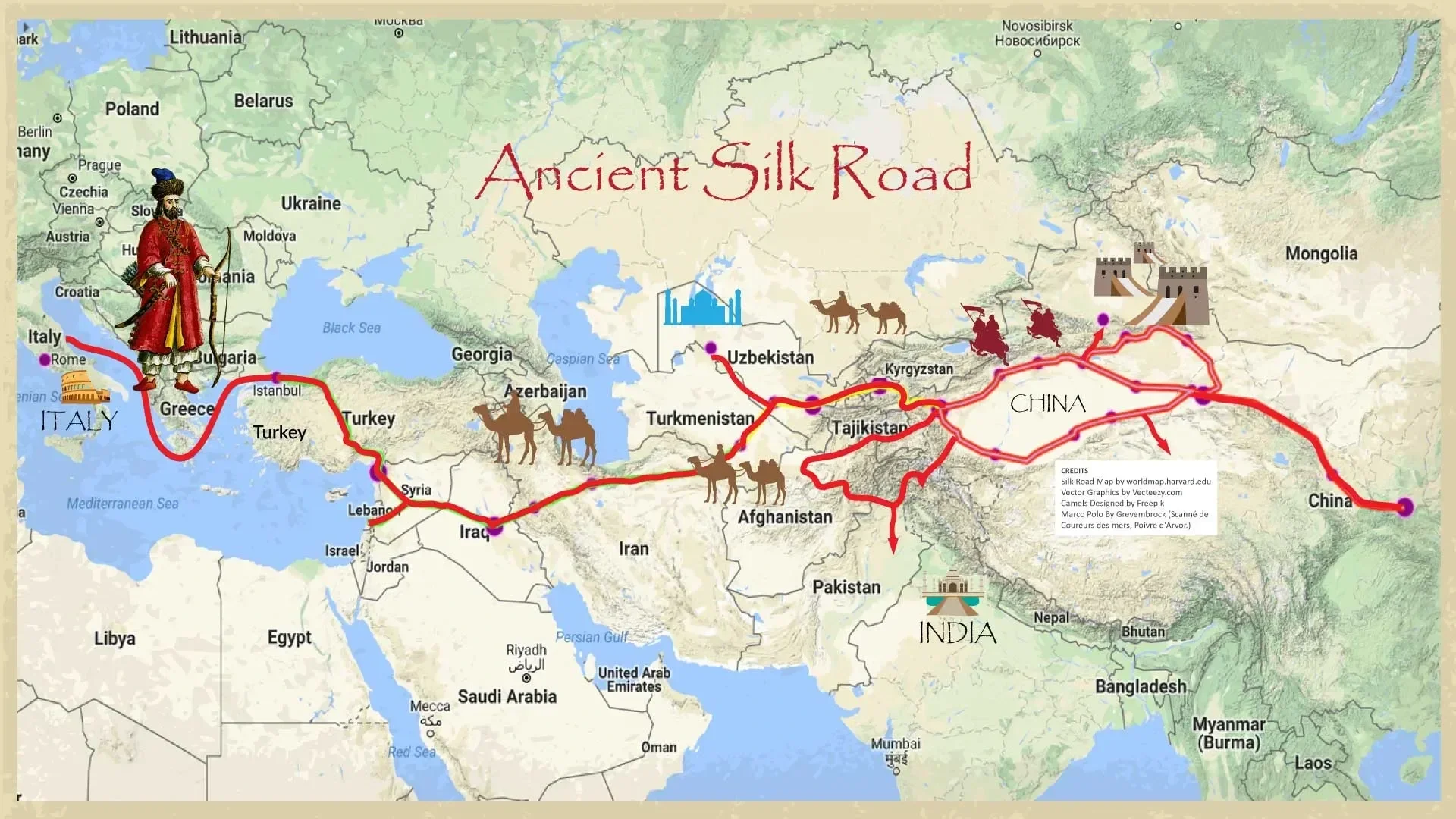
Stretching from China and Central Asia to the Middle East and the Mediterranean, the Silk Road was a network of trade routes that connected East and West for over a thousand years. Along the way, people shared not just goods, but recipes, spices, and ways of cooking.
Across cultures, there have always been places that welcomed the traveler — the caravanserai along the Silk Road, where people stopped to rest, eat, and connect. These spaces carried a spirit of openness, nourishment, and shared presence.
In Hungary, the csárda held a similar role — a simpler hearth, where food, rest, and human warmth were offered without complication.
Long before modern business, hospitality was one of the first ways people cared for one another — and made a life through it. It seems, I am one of those people.
To me, food has always been about abundance — not measured and portioned but generous, colorful, and alive. I’m drawn to traditions where meals unfold in many dishes and layers: from India and Persia to South America and the Mediterranean, where mezze and shared plates create a sense of ease, grace, and togetherness.
That’s the feeling behind Silk Road — food meant to be shared, passed around, and enjoyed together.